Lockouts · Mississauga
Broken Key Extraction
A roommate tried to help with tweezers, then by gluing the other half to it. The fragment is now further in than it started, there is dried glue around the keyway, and the front door still does not open.
Broken Key Extraction
In plain words
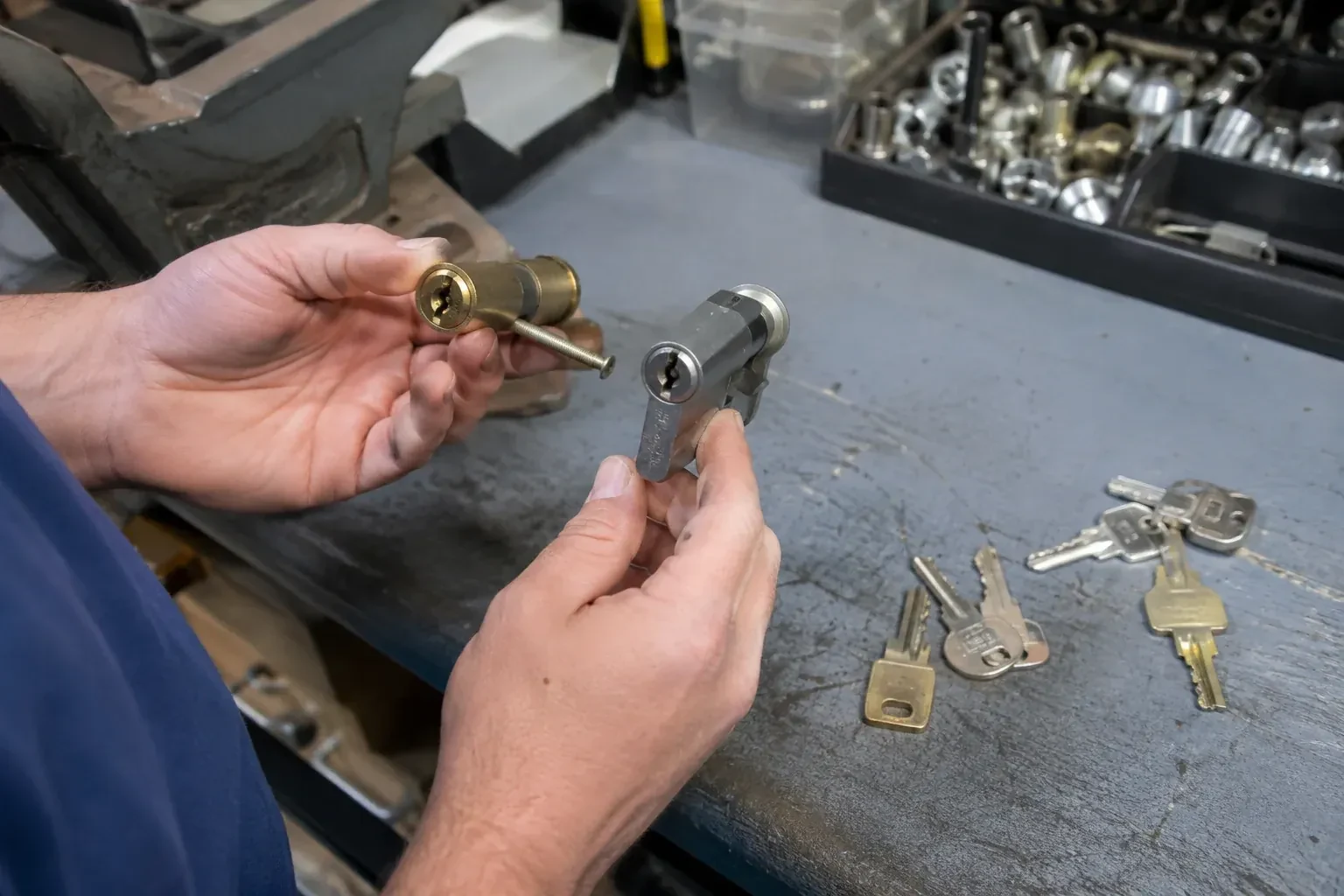
The tools are simple and precise. A hook extractor is a thin strip of spring steel with a barb at the tip; it slides along the groove of the keyway above or below the fragment, snags one of the cuts, and walks it out. A spiral extractor works like a tiny screw, threading into the ridges of the cuts and gripping as it turns. Fine-tipped extractor pliers handle a piece that shows above the face. A tension tool brings a turned plug back to rest. None of these push inward, which is the whole point: the piece comes out the way it went in and the cylinder stays whole.
How the visit goesThe padlock on the shed has been stiff all summer. Today the key twisted, cracked at the tip, and left the end buried deep in the keyway. The rest came out in your hand, and the padlock is still closed.
Mississauga
How the visit goes
What has already been tried
Before choosing a tool the locksmith asks what has gone into the keyway since the break. Tweezers often push a fragment deeper; a screwdriver tip can bend pins; a drop of glue on the other half bonds to nothing useful and leaves a film that has to be dissolved before extractors will slide. A second key jammed on top of the first is a common find. None of this is anything to be embarrassed about; it just changes the plan, and knowing about it in advance means the right solvent, a plug follower or a spare cylinder is in the van before work starts.
Thawing first on a frozen lock
A cylinder that broke a key because it was frozen needs the ice dealt with before the fragment will move. The locksmith works lock de-icer into the keyway, or holds gentle heat near the cylinder, until the ice inside liquefies and the plug loosens. Boiling water from the kettle stays indoors: it refreezes inside the keyway and can split a cold cylinder. With the plug free and at rest, the extraction proceeds as normal. Afterwards the cylinder is dried thoroughly and given a water-repelling dry lubricant rather than one that traps moisture, so the same morning is far less likely to repeat.
A key cut from the pattern, not the wear
You leave with a key that was cut to the lock's original specification rather than traced from the tired blade that just failed. That difference shows every time you use it: it seats fully, lifts each pin cleanly and turns without a wiggle. Two or three copies made from that fresh cut give you spares that are as good as the first. The old bent or thinning keys that shared the ring are worth retiring now, because a key that has started to bend has started to crack, and the next one to snap will be one of them.
Broken Key Extraction
In the van
- Manufacturer-approved cylinder lubricant
- Spiral key extractors
- Plug follower and cap tool
- Key gauge and decoder
- Key blanks and code cutter
What affects the quote
Same fees day, night or weekend
1Whether the plug turned before the break
A key that snapped mid-turn leaves the plug rotated and the pins holding the fragment. Easing the plug back to rest before extraction is an extra step in the work.
2When you call
Whatever hour you call about a broken key extraction — morning, evening, a weekend or a holiday — the amount is the same. Locksmiths are reachable at any time, and the exact figure is confirmed on site once the technician has seen how deep the fragment sits.
3How far the locksmith travels
Every call-out includes the drive. A lock on the next street and one at a rural address an hour out are different trips, and the quote includes travel as its own consideration.
Broken Key Extraction: questions
Why did my key break at all?
Often fatigue, though not the only cause. A brass blade is weakest where the deepest cut leaves the least metal, and thousands of turns can slowly work a crack into that spot. Then one morning something asks more of it: a frozen cylinder, a bolt binding in a swollen door, grit in the keyway, or turning before the key was fully in. A bent, worn or poorly cut key can also fail on its own, with no such trigger. The lock is inspected afterwards to find which applied.
Can the piece be pushed out from the other side?
On a standard door cylinder the keyway is closed at the back by the plug and the tailpiece, so there is no straight path through. What a locksmith can do is remove the cylinder, take off the cap, and push the plug out of its housing with a follower, which frees the fragment from behind. That is done on the bench, not by forcing anything from the inside of the door.
What lubricant should I use on the lock afterwards?
Whatever the lock's own maker specifies, since cylinders differ: many call for a dry graphite or PTFE spray blown into the keyway and worked in with the key, once or twice a year, while others prohibit graphite and specify their own product instead. General-purpose oils, grease and sprays feel smooth at first but on most cylinders collect dust and clog the pins, which leads back to the sticking that breaks keys. A little goes a long way; too much of any lubricant can also hold moisture.
Lockout Services
- Business Lockout ServiceIt is ten to nine, three staff are on the sidewalk with their coffees, and the key that has opened…
- Break-In Damage Lock RepairThe shop's aluminum door has a bent meeting stile and the hookbolt is jammed half out.
- Seized & Jammed Lock OpeningThe lock works, but only if you lean on the door with your hip while turning the key.
Broken Key Extraction near you
Choose a service to see how it works in Mississauga. Each page explains the situation it suits, what the locksmith looks at first, how the job is done, and how to look after the hardware afterwards. If your problem sits between two services, either page will get you to the right conversation.